VALENCIAN BAROQUE MASTERWORK BOASTS GREATEST FRESCO ART IN SPAIN


The parish church of San Nicolás de Bari and San Pedro Mártir in Valencia houses one of the greatest wonders of fresco painting that Spain has to offer. This historic parish church is located in the city centre and thanks to an extensive restoration in 2016, this place of worship is now a tourist and cultural showcase known as "The Sistine Chapel of Valencia".

This designation is not entirely logical, since San Nicolás is a single-nave church with six sections, twelve side chapels with buttresses (two of which are occupied by side entrance doors) and a magnificent polygonal presbytery facing east. The Sistine Chapel, on the other hand, is only one "chapel" in the Apostolic Palace, the official residence of the Pope (Vatican City).

In any case, one statement is true: San Nicolás is indeed one of the best examples of the juxtaposition of 15th century Valencian Gothic architecture and a spectacular 17th century Valencian Baroque masterpiece. Let's take a look...

* Report by Karla Ingleton Darocas, Hons. B.A. (SpainLifestyle.com) (C) no part of this text or photos may be replicated)


Velázquez, Politics, and "Los Borrachos

Diego Velázquez (1599–1660), a master of the Spanish Baroque and key inspiration to the Impressionists, cemented his status as court painter to King Felipe IV after winning a prestigious 1627 competition against older rivals. 
Painted in 1629, Los Borrachos (The Drunks) stands as his first major mythological work, skillfully blending the youthful, luminous figure of Bacchus with the gritty, picaresque realism of common men in a style that influenced later masterpieces. 
This Baroque scene, housed in the Prado Museum, blends moral commentary with humor, reflecting the influence of Rubens and the naturalism found in Cervantes' Don Quixote. For a detailed analysis of this artistic period, read more in this report by Karla Ingleton Darocas for SpainLifestyle.com.

(c)  KarlaDarocas.com 

GRAND SCALE CHURCH BRINGS CLASSICAL BEAUTY AND HISTORICAL LEGACY TO OLIVA

FRONT and BACK
Oliva is a pretty and lively town on the outskirts of the province of Valencia in the region of Safor, which has a very beautiful, stylish and colossal neoclassical church in its centre.

The parish church of Santa María la Mayor represents the historical, cultural and spiritual development of the Valencia region in its architecture. Let's take a look...

* Report by Karla Ingleton Darocas, Hons. B.A. (SpainLifestyle.com) (C)  (KarlaDarocas.com) no part of this text or photos may be replicated) 

A ROMANTIC ETCHING OF JAVEA

I saw this etching of the fortress church of San Bartolomé on Facebook and no one was talking about it, so I grabbed it. At first, I thought it belonged to the Parisian artist Andre Lambert, who settled in Jávea around 1920 and made his paradise on the Costa Blanca a meeting place for international figures from the world of art and culture. His ashes have been part of the Portichol pine forests since his death in 1967 

I looked at his etchings again, but this one did not belong to him. So after a lot of research on Google, I do not know who it belongs to.

** Report by Karla Ingleton Darocas  (KarlaDarocas.com)

NEOCLASSICAL GREATNESS BEFORE THE AGE OF 50

 Una mirada fotográfica al taller del artista - hoyesarte.com
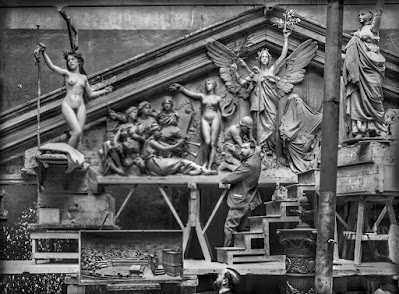
Querol in his workshop - 1892

To achieve great things before the age of 50, you need a very positive attitude and the belief that you can achieve everything you set out to do.

Report by Karla Ingleton Darocas  (KarlaDarocas.com)

This was the case with the neoclassical sculptor Agustín Querol y Subirats (Tortosa, 1860-Madrid, 1909), who achieved amazing success before he died at the age of 49.

NEOCLASSICAL TRUTH WITHOUT FLATTERY

The woman in this 1836 portrait is a Madrid aristocrat, Señora Delicado de Imaz. This woman is of an age and affluence where she is not interested in being painted as an object of desire, but as a woman of elevated society and enlightenment. She is a woman for whom wealth and power are more important than beauty and frivolity.

* Report by Karla Ingleton Darocas, Hons. B. A.  (KarlaDarocas.com)

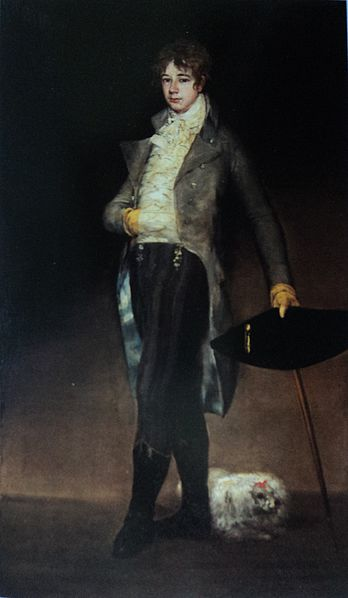
JAVIER GOYA AND HIS DOG

DOGS OF LEISURE

After the war between Spain and the First French Empire, which began in 1808 with the invasion of Napoleonic troops and ended in 1814 with the return of Fernando VII to Spain and absolute power, Spain was destined to shake up its social structures with the emergence of diversified social classifications. 

There were still the noble families with land titles and wealth, and of course the peasants who owned nothing, but now there was a newly emerged stratum in Spanish society based on the wealth created by trade, manufactures, modern agriculture, retail, professions such as doctors and lawyers, and even arts and crafts. These self-employed people and family businesses formed a social class based on materialism and the pursuit of respectability called the bourgeoisie. 

The bourgeoisie was now the class of people who wanted companion dogs to demonstrate their ability to spend their leisure time, and so the miniature dog breeds made a big comeback. Small dogs were now a symbol of success, a happy family life and a home because they had a good income.

REVIEW * CLASS TRIP TO XATIVA FINE ART MUSEUM * OCT.16, 2022


Xàtiva was called Saetabis in Roman times and was famous for its linen fabrics, mentioned by the Latin poets Ovid and Catullus. Xàtiva is also known as an early European centre of papermaking. In the 12th century, the Arabs brought the technology for making paper to Xàtiva (Arabic: Shāṭiba). It is the birthplace of two popes, Callixtus III and Alexander VI, and also of the painter José Ribera.


We had the most beautiful weather to explore Xàtiva and visit the museums. After parking, we went to the main market to have a coffee, but nothing was open yet. We decided to try the main street where all the cafés were open, and the coffee was delicious. A marathon race was about to start, and we watched while enjoying our coffee.

* Report by Karla Ingleton Darocas. Hons. B. A.  (KarlaDarocas.com)

ART TALK * GOYA GRANDEUR * tba


In this Talk we will compare two paintings by Francisco Goya. The first is entitled The 3rd of May 1808 in Madrid, or "The Executions". It was painted in 1814 after Fernando VII returned to Madrid. It is archived in the Prado Museum in Madrid. 

The second painting is called Saturn Devouring His Son. Goya painted this work directly on the wall of his house on the outskirts of Madrid between 1819 and 1823. It is kept in the Prado Museum in Madrid.

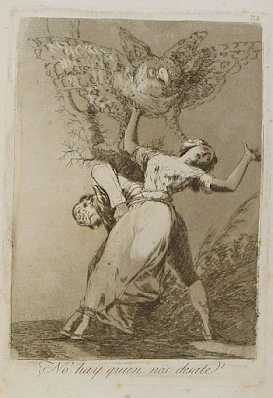
GOYA ATTACKED ARRANGED MARRIAGES WITH HUMOUR


Francisco José de Goya y Lucientes (1746 - 1828) paintings, drawings and engravings reflected contemporary historical upheavals. He supported the new enlightened and educated spirit of the times by opposing arranged marriages. At that time, the function of marriage was merely a means to promote the economic or social success of the family and ignored the pain that people suffered.

** Report by Karla Ingleton Darocas. Hons. B. A.  (KarlaDarocas.com)