Who is commemorated by the bust in Benissa?
Granada's Renaissance Portal
The door and portal of the Iglesia del Monasterio Jerónimo de la Concepción (Monasterio de San Jerónimo) in Granada, Andalucía, are remarkable examples of Renaissance architecture, crafted by Martín Díaz Navarrete around 1593.
What secrets lie within the portal of Carlos V at the Alcázar of Toledo?
The main portal of Carlos V at the Alcázar of Toledo is a stunning example of Spanish Renaissance architecture, reflecting the grandeur and ambition of Carlos I of Spain during his reign. Designed in the Plateresque style, the portal combines Gothic, Renaissance, and Moorish influences, showcasing the highly decorative and intricate craftsmanship of the era.
Dwarfs at Felipe IV’s Court: The Secret Role You Didn’t Know About!
A RARE LOOK INSIDE A 1616 RENAISSANCE CHAPEL IN JAVEA
On a recent Javea Walk with a nice group, we were lucky enough to find the large metal doors of the Convento de los Mínimos chapel open. This chapel was originally built in 1616. After its destruction, it was rebuilt in 1946 especially for the Augustinian nuns in Xàbia (Jávea), who had lost their convent and chapel in the town centre when they were destroyed during the Spanish Civil War in 1936.
Discover Heavenly Splendor: The Main Altar and Ribbed Vaulting of Albarracín Cathedral
Happily spending eternity is the medieval town of Albarracín, and the Cathedral of El Salvador that stands as a testament to centuries of devotion, artistry, and architectural ingenuity. Among its many treasures, the main altar and the intricate ribbed vaulting above it are particularly captivating, embodying the spiritual and aesthetic ideals of their time.
The Autumn Beauty of the Crystal Palace in Retiro Park, Madrid
As the golden hues of autumn sweep across Madrid, few locations capture the season’s enchanting charm quite like the Crystal Palace (Palacio de Cristal) in Retiro Park. Nestled within this verdant urban oasis, the palace stands as a shimmering beacon of architectural brilliance, framed by the vibrant reds, oranges, and yellows of the season. Autumn transforms the park into a living painting, and the Crystal Palace becomes its dazzling centerpiece.
THE VELVET TOILET: A Peculiar Treasure at the Museum of Romanticism
The Museum of Romanticism in Madrid, housed in a former private palace from 1776, immerses visitors in the art and culture of Spain's 19th century. While not one of Queen Isabel II's residences, the museum displays items from her era, offering a glimpse into the aesthetic and lifestyle of the Romantic period.
A Mother's Love by Antonio Muñoz Degrain
Without cameras to document disasters as we do today, artists were the ones who captured the depth of human tragedy through their work. Romantic painter Antonio Muñoz Degrain created Mother’s Love to vividly pull at our heartstrings. Painted between 1912 and 1913, this sizable oil on canvas (204 x 160.5 cm) was donated by the artist himself to the Museum of Fine Arts in Valencia in 1913.
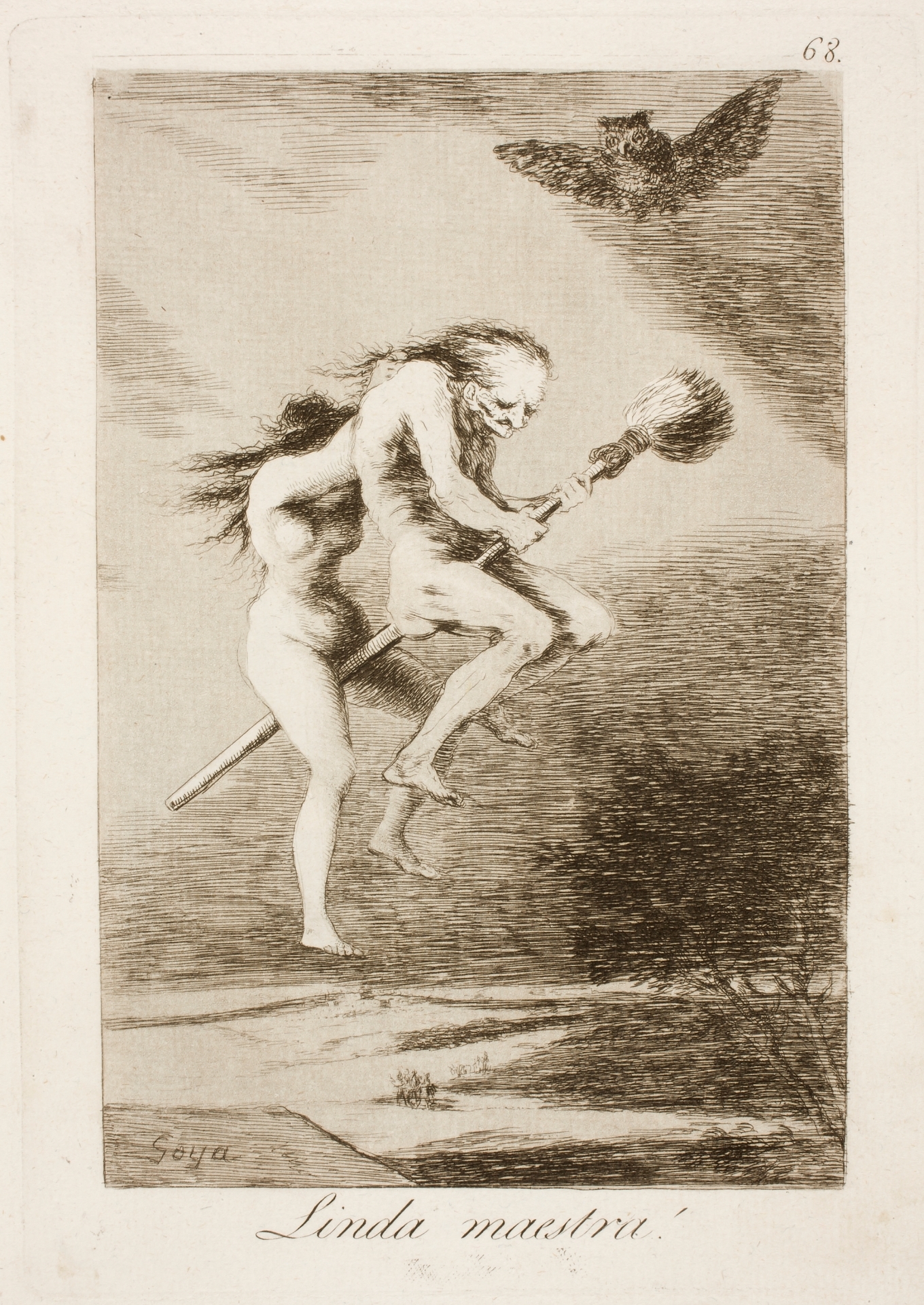
GOYA KNEW THE SECRET TO THE WITCHES FLIGHT
Since Halloween and the Day of the Dead are very close to each other, who better to take up the theme of witches' flight than Francisco Goya. Traditionally, witches were believed to use a broom to move through the air and assist the coven in places far from their usual haunts.
The women accused of witchcraft were women who took care of the home: wives, midwives, servants, etc. And what do these people have in common? A broom! It stands to reason that the broom was a representation of women and thus became the witches' tool.
Goya, who knew the aspects of witchcraft well, captured the moment when an old witch initiates a young woman into these practises. But he also knew that it was not the broom that gave the witches their flying abilities.
* Report by Karla Ingleton Darocas. Hons. B. A. (KarlaDarocas.com)
Spain’s Witchcraft Legacy
Did You Know...
Spain has a lot to do with the perceptions and fears that continue today about witches and their crafts?
Yes, indeed it is true!
In 1610, the infamous "Quema de brujas en Logroño" (Burning of the Witches in Logroño) witch trials took place, and a local printer, Juan de Mongastón, published a pamphlet chronicling the events. This document detailed the trial and condemnation of 53 people accused of witchcraft, along with five skeletons and five effigies, creating a vivid picture of witchcraft and its supposed dangers.
THE UNSOLVED MYSTERY OF GOYA'S MISSING SKULL
-
Since returning from our fabulous four-day SpainLifestyle Baroque & Renaissance Road Trip, many of my friends and colleagues have a...
-
A small Valencian family distillery in the old stables of the Palau del Marquès de Malferit, could be the origin of one of the emblems of c...
-
THE ENIGMA Dionisio Fierros (1827-1894) was a Spanish Romantic painter who painted a “Vanitas”, an allegorical still life, for the Marquis ...


.jpg)