SOROLLA VISITS TOLEDO TO PAINT AND HOLIDAY IN 1906

For those who travel to Toledo, these historical photographs may surprise you by their stark landscapes in contrast to the tourist torrent that we know Toledo to be today. For those of you who adventured with me on the Art Lovers Trip 2018 to Toledo, these photos will be of greater interest.

In 1906, the 43 years old Sorolla was at the height of his career. He had just sold most of his 500 works, oils and drawings, at a spring exhibition in the Gallery of Georges Petit in Paris. He celebrated by spending a few weeks in the flashy tourist resort of Biarritz, of course painting landscapes, so different from those of the Mediterranean. At the end of this summer, he was heading back to his residence in Madrid but decided to jaunt over to the once grand old city of Toledo, then neglected as the capital due to the rise of Madrid city.

This decision came from his close relationship with friend and associate Aureliano de Beruete with whom he shared a fondness, even a love for Toledo .

Several letters between the two of them suggested that Sollora could come to Toledo to assist his friend with the much needed actions being taken to recognise the works of El Greco and the inauguration of the El Greco house-museum.

Sorolla arrived in Toledo on October 21, at first alone, and days later joined by his wife Clotilde and their children.

Their hotel of choice was the extraordinary first class hotel Gran Hotel Castilla, now the General Treasury of Social Security. This was the hotel to rub shoulders with illustrious and wealthy visitors, bourgeois, dealers in search of artistic heritage, and nobles such as Beruete himself.

During his stay in Toledo, he produced twelve canvases. The family returned to their home in Madrid on November 4.

SOROLLA EXHIBIT SHOWCASES SUBLIME AND POETIC EARTHY AESTHETIC

On our Spain Lifestyle Art Lovers Trip to Toledo 2018, we were so very lucky to be able to witness some rare and remarkable paintings by our favourite Valencian master impressionist painter of light, namely Joaquín Sorolla.

We were at the Santa Cruz museum admiring all of the artefacts, expressive and religious fine arts, especially by the famous Mannerist icon El Greco and low and behold, a sign pointed to an upper gallery stating that an exhibition by Sorolla called "Tierra Adentro" (Inland Earth) was being featured; this way said the arrow! 

One of my students had spotted the exhibition first and was extremely excited when confronting me on the very fact that upstairs there was 68 works by Sorolla. "You are going to freak out," explained my student.

"El arcoiris" - El Pardo 1907 - (c) Sorolla Museum

MONDAY MORNING MOVIE

TRISTANA
ABOUT THE FILM

Tristana is a 1970 Spanish film directed by Luis Buñuel (1900 – 1983). Based on the eponymous novel by Benito Pérez Galdós, it stars Catherine Deneuve and Fernando Rey and was shot in Toledo, Spain.


The story is set in the late 1920s to early 1930s. Tristana is an orphan adopted by nobleman don Lope Garrido. Don Lope falls in love with her and thus treats her as wife as well as daughter from the age of 19. But, by age 21 Tristana starts finding her voice, to demand to study music, art and other subjects with which she wishes to become independent. She meets the young artist Horacio Díaz, falls in love, and eventually leaves Toledo to live with him. When she falls ill, she returns to don Lope.


Buñuel wanted Tristana to be his triumphant return to Spain after living exiled in Mexico for several decades. Buñuel travelled to Spain in the spring of 1969 to begin work on the film, and was immediately sidetracked by the Spanish censors. Spain's Franco government made it difficult for Buñuel to get his films approved, but it finally was allowed.


ABOUT THE AUTHOR OF NOVEL

Benito Pérez Galdós (1843 – 1920) was a Spanish realist novelist, considered second only to Cervantes in stature as a Spanish novelist. He was the leading literary figure in 19th century Spain.

Galdós is critical of the Catholic Church as a dominant force in Spanish cultural life. He attacked what he saw as abuses of entrenched and dogmatic religious power rather than religious faith or Christianity per se. In fact, the need for faith is a very important feature in many of his novels and there are many sympathetic portraits of priests and nuns.

Benito Pérez Galdós BY Joaquín Sorolla

TOLEDO

GREAT CITY 2 Part Presentation Guide to Toledo that will set you up for all the city monuments, art, architecture and history of this great imperial city.


10:30 H * DAROCAS STUDIO * Benitachell

IMPASSIONED AND PENETRATING ART COMES TO ORBA

Art Loves are invited to a unique art show at the Exhibition Hall Casa Senyoria in the charming village of Orba from January 13th to February 25th.

The show is called “Remnants”, and it features are artworks of Katherine M Waters and Don Henderson.

Feature by Karla Darocas
click poster to enlarge

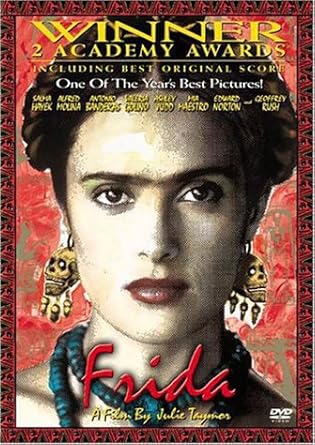
FRIDA * ART FILM

Related image

For those of you who attended my Frida Kahlo presentation, I talked about this film.

MURCIA CITY AND MUSEUM OF FINE ARTS EMBRACES STREET & GRAFFITI ARTISTS IN A REALLY BIG WAY

Urban art: From the Street to the Museum is a really exciting show that is on offer at the Museum of Fine Arts of Murcia (MUBAM) · From 05/04/2017 to 07/09/2017.

GOYA * FOLLY, WAR & MADNESS - tba

The second half to Goya's life and works showcase his overall perspective of life becomes dark and cynical. Now he turns the dramatic Romanticism deep into the monstrous side of the irrational and the dangerous flaws of Enlightenment.

He uses the new invention of "aquatint" (a print resembling a watercolour, made by etching a copper plate with nitric acid and using resin and varnish to produce areas of tonal shading.) as a form of print making to fuel his revelations and revolutionary expressions in order to lampoon, satirize and mock the institutions, practices and commonly held beliefs of his time.

In 1799 Goya published 80 Caprichos prints depicting what he described as "the innumerable foibles and follies to be found in any civilized society, and from the common prejudices and deceitful practices which custom, ignorance, or self-interest have made usual."
Another collection of 82 prints called the Disasters of War, 1810s, Goya vents his visual voice with protest against the violence of the 1808 Dos de Mayo Uprising, the subsequent Peninsular War and the setbacks to the liberal cause following the restoration of the Bourbon monarchy in 1814.

The scenes created withing these prints are singularly disturbing, sometimes macabre in their depiction of battlefield horror, and represent an outraged conscience in the face of death and destruction. Goya expresses the randomness of violence in these prints, and in their immediacy and brutality they have been described as analogous to 19th- and 20th-century photojournalism of the atrocities of war.

They were not published until 1863, 35 years after his death. It is likely that only then was it considered politically safe to distribute a sequence of artworks criticising both the French and restored Bourbons.
Goya created another set of prints - Tauromaquia (the art of bull fighting) between 1815 and 1816, at the age of 69. Bullfighting was not politically sensitive, and the series was published at the end of 1816 in an edition of 320—for sale individually or in sets—without incident. It did not meet with critical or commercial success however.
His late period culminates with the Black Paintings of 1819–1823, applied on oil on the plaster walls of his house the "Quinta del Sordo" (house of the deaf man) where, disillusioned by political and social developments in Spain he lived in near isolation.

The paintings originally were painted as murals on the walls of the house, later they were lifted off the walls and attached to canvas. Currently they are held in the Museo del Prado in Madrid.

At the same time, he worked on 22 prints called Los disparates (The Follies), also known as Proverbios (Proverbs) or Sueños (Dreams), again a series of prints in aquatint and etching, with retouching in drypoint and burin, created between 1815 and 1823.

The scenes of the Disparates, which are difficult to explain, include dark, dream-like scenes that scholars have related to political issues, traditional proverbs and the Spanish carnival.


Goya eventually abandoned Spain in 1824 to retire to the French city of Bordeaux, accompanied by his much younger maid and companion, Leocadia Weiss, who may or may not have been his lover.


** end **

*******
APPRECIATE ART & CULTURE * LOVE SPAIN
Resource Books written by
Karla Ingleton Darocas 
and published by
SpainLifestyle.com 

CLICK  HERE *

*******

ART FILM * THE EXTERMINATING ANGEL . directed by Luis Buñuel.

SUNDAY, JANUARY 29TH
10:30 * Coffee, Film & Discussion
5 euro donation
DAROCAS STUDIO * Benitachell

Starring Silvia Pinal, Jaqueline Andere, Enrique Rambal Mexico 1962, 35mm, b/w, 94 min.
Spanish with English subtitles.

Watch as the legendary Spanish surrealist film master Luis Buñuel psychologically tortures a mansion full of uptight high society dinner guests.

Leaving Franco Spain for the artistic freedom of Mexico, in 1962 Buñuel stays true to his surrealist roots and makes this iconoclastic film.

It is a film that demands your attention by breaking narrative rules.

It also draws you into the tragic reality of the characters who cannot process nor escape their situation. These characters are a class of people who thrive by materialistic values and conventional attitudes. They are bound to their rules by duty and etiquette. When the reality of their dinner party becomes very strange, it is their base instincts and phobias that come to the surface.

This film is full of sarcastic wit, unconscious and dreamlike images, Freudian slips, drugs, sex, death, suicide - just to make sure you are paying attention... and so much more!!

It is a timeless masterpiece of surrealist art.

It is also a revolt against all oppressive civilizations... like Franco's Spain.

success

CONGRATULATIONS

Your purchase is being processed.


If you have any questions, you can email me at info@SpainLifestyle.com

Thank you,

Karla Ingleton Darocas

cancel

Sorry to see that you have cancelled your purchase.

Hopefully, you will return again.

If you need any help, please email me and I can help you.


Thank You

**

FINE ARTS TRIP MADRID 2016


Thank you from my heart to Karla Ingleton Darocas for organising an unforgettable few days of visiting art galleries in Madrid. Sorolla House, the Spanish masters at the Prado, the Thyssen museum with a fantastic Renoir exhibition, the Queen Sofía for mind-blowing Dalí and Picasso and the exquisite romantics and costumes of the period at Queen Isabel II House...

A stroll through Retiro Park and a blissful 10 minutes listening to an audio art installation in the glass house, the sights, sounds and architecture of this great city, joyful dinners, cake and coffee morning teas, and hot chocolate and churros at the famous Choclatería San Gines.

Travelling at 300+ kmph on the high speed train was a thrill. Enjoyed every minute of all of this and grateful to Karla for organising it all and especially her fantastic in-depth knowledge of the paintings, the painters and the juicy gossip about the characters of the time, just fascinating and enlightening. XXXXX

- Kathleen Misson

*  *  *  *  *  *

Hi Karla.
I just wanted to thank you for a wonderful few days in Madrid - I had a great time and really enjoyed the museums especially with all your immense knowledge surrounding the artists and paintings and of course the Spanish history - although I am now brain dead and absolutely knackered what a time spent with everyone on our whirlwind tour!
- Janis Turner

*  *  *  *  *  *

Hi Karla
Thank you so much for your lively commentary and company, you were the cherry on the cake, that made our trip to Madrid so perfect.  Having participated in both the Dali lectures and Sorolla, it really helped me to have a better understanding of their art form, rather than just saying "I Like" "I don't like".  And, opened my eyes to alternative art forms as well.

Only disappointment for me, was that the Sorolla Museo was only partically opened.  Having been there last year, before your Sorolla lecture, I was so looking forward to greedily feasting my eyes...

- Helen Baxter

*  *  *  *  *  *

How did you hear about Karla Darocas educational sessions, trips, films and workshops
* Through attending her other lectures and talks

What did you learn?
* Not just about the paintings but also much more about the lives of the artists

What features did you feel were beneficial in this event?
* Seeing the actual paintings that were shown at the lectures and talks - it makes it so much more real it brings the whole thing into prospective especially with all the extra imput from Karla about the why and how surrounding any particular works.

What elements did you like about the teaching style of Karla Darocas? * Her absolute passion about art which makes the student want to learn more

Would you recommend Karla Darocas teaching and events to others?
* Absolutely

FULL NAME & LOCATION * Janis Turner

*  *  *  *  *  *

How did you hear about Karla Darocas educational sessions, trips, films and workshops
* From having attended her lectures

What did you learn?
* So much that my brain aches but am hungry for more

What features did you feel were beneficial in this event?
* Karla somehow manages to combine not only her immense energy but also a wonderful laid back and thoughtful approach to her lectures that evokes hunger for more knowledge along with an inspirational new viewpoint on the artists whilst delving into their lives and loves.
She brings it all to life and I absolutely love it.

What elements did you like about the teaching style of Karla Darocas? * Her vast knowledge

Would you recommend Karla Darocas teaching and events to others?
* Absolutely

FULL NAME & LOCATION
* Sue Martin from Pedreguer

*  *  *  *  *  *

How did you hear about Karla Darocas educational sessions, trips, films and workshops
* Media

What did you learn?
* Artist technique, brush strokes how you interpret what the you are seeing. Understanding how art changed when able to take the canvas outside into natural light.

What features did you feel were beneficial in this event?
* I learnt about the history and context of when a painting was created. Who influenced the artist, the people who commissioned the paintings. The style of painting and the advent of photography alongside new techniques in painting. All learnt alongside a great deal of fun, Karla makes the time and artists come alive with a great knowledge of history. Fantastic trip and I can highly recommend it to anyone wanting to broaden their understanding. Thanks Karla and all the ladies who came too as that friendship is very important too.

What elements did you like about the teaching style of Karla Darocas? * Making it fun with so much insight

Would you recommend Karla Darocas teaching and events to others?
* Yes

FULL NAME & LOCATION
* Lizzie Clayton

*  *  *  *  *  *